Wednesday, 24 August 2022

How To Move On After A Relationship With A Narcissist

Being in a relationship with a narcissist can seem like a never-ending cycle of pain, loneliness, abuse and many other feelings. You may have remained empathetic and forgiving throughout the relationship but perhaps at some point you realized it was important to stop this negative cycle and find your freedom. Breaking the negative cycle of the relationship was probably the best thing you could have done for your emotional and mental well-being! Though, it may not feel like this immediately, it will get easier with time as you move on with your life. At the beginning it is time to focus on healing and self-care. Focusing on your own life and well-being after spending all your energy on your narcissistic partner can be difficult at first. But, there are a few things that you can do to make the journey easier so that you can heal, regain your self-worth and move on with your life.

Set Necessary Boundaries

Getting out of a relationship with a narcissistic person was the first step. But it can be tempting to allow them to come back into your life in some capacity. In doing so, you will be setting yourself up for more pain and more problems in the future. Though it can be hard at first, it is important to set boundaries when it comes to your narcissist ex-partner contacting you. It may be beneficial to block them from calling you, sending you messages, etc. Another good idea might be to get rid of anything in your own home that reminds you of them and the negative experience. Cutting ties quickly and completely is never easy, especially if you were in a narcissistic relationship for a long time. But, it is the best way to start the healing process with less distractions.

Accept the Truth and Move On

You may have suffered both mentally and emotionally for years by your narcissistic partner. Maybe you denied it or refused to see it while you were with them. But, after the relationship is over, it is important to accept that truth. Accept the reality that the individual you were with was toxic to your life. It can sometimes be a hard pill to swallow, and it can often make people feel guilty or even feel ‘at fault’ for allowing such things to go on for so long. That is why the next portion of this tip is equally-important: Learn to forgive yourself. It is not your fault that you stayed in a relationship with a narcissist. It just goes to show that you valued the relationship itself, and that perhaps you saw something in that person that may not have actually been there. Don’t blame yourself for how that person made you feel, and don’t blame yourself for staying in an toxic relationship. Forgiving yourself will allow you to move on and take control of your life again.

Listen to Yourself

There may be an underlying reason within you that initially drew you to a narcissistic person, and that same reason may be why you stayed with them for so long. Listening to your inner thoughts and feelings can help you to determine why that might be. Keep in mind that there is a difference between self-understanding and self-blaming. Keep listening to that inner-voice and ask yourself how you feel now, after you have left that narcissistic individual. Your intuition is stronger than you might think, as long as you open up and allow yourself to really listen to it.

Change Your Focus

As humans, it is not always easy for us to just forget the past and move on. This is especially true when it comes to relationships of any kind. But, after you have given yourself some time to heal, shifting your focus and becoming more mindful will be a big help. Start to focus on the present and on the future, and how these things make you feel. Think about your goals and dreams, even if you haven’t considered what they might be in years. They will give you something to look forward to, something to feel excited about and also something to focus on, which will make it easier to pull yourself out of any negative thinking associated with your past relationship.

Be Patient With Yourself

Perhaps the most important tip to put into practice is to be patient with yourself after you end your relationship with a narcissist. Maybe you keep falling back into sadness when you think about the relationship. Maybe you feel like you are not moving forward quickly enough, and you want to “get over” those negative feelings that keep sticking with you. Everyone deals with the aftermath of a breakup differently. When you were in a relationship where emotional abuse was involved, dealing with that kind of trauma can make things even more difficult. Be kind to yourself, and try to eliminate any negative self-talk. This goes along with forgiving yourself, of course. But it is also necessary to be gentle with your own emotions as you continue to work through everything.

Don’t assume that one setback is going to drag you back to where you started. There is no set time limit you need to keep track of when it comes to your healing process. No matter how long it might take you, the most important thing is to be persistent and not to give up on yourself. Hopefully, some of the suggestions listed in this article will make the aftermath of living with a narcissist a bit easier for you. Remember, this is an opportunity for you to take the reigns back on your own life. Though it may be a slow process at the beginning, you will feel so much better once you finally find personal freedom, and once you have moved on with your life after being in a relationship with a narcissist.

Childhood Roots of Narcissistic Personality Disorder

It’s estimated that up to 6 percent of the U.S. population has narcissistic personality disorder (narcissism for short), which is more common in men and has its roots in childhood. Extremely resistant to treatment, this severe mental condition leads affected individuals to create chaos as they harm other people. Before discussing how demands for support of ego and desires can go off the rails, let’s start with an overview of pertinent normal child development. Small children are naturally selfish as a normal part of development in which they work to get their needs met and can’t understand other people’s needs and desires. Then as teenagers, kids are still typically self-centered as they struggle for independence.

As opposed to self-centeredness that should gradually decline, children need to develop healthy, lasting levels of self-esteem to be able to protect and care for themselves while caring about others, resist dangerous influences, and stay connected to family and society. Healthy levels of self-esteem indicate a child’s belief that he or she is loved and worthy as a person in the family and in society, and thus doesn’t deserve and is more resilient to mistreatment. In a nutshell, self-esteem isn’t self-centeredness because it doesn’t lead to putting oneself first to the detriment of other people’s needs and rights.

Typical childhood self-centeredness must change to pave the way to mental health in adulthood. To grow up able to function well in families and society, kids must gradually gain both the ability to see other people’s viewpoints and empathy for other people’s suffering. So, healthy kids should gradually show sincere signs of caring about the well-being of others. Not developing empathy while growing up is a warning sign of developing a serious personality disorder as an adult, including the narcissistic type. How do people with narcissistic personality disorder (narcissists for short) act? Besides showing a lack of empathy (as judged not by words but by actions), narcissists filter information and react on the basis of the effect on their egos. Their actions reflect grandiose beliefs of superiority and uniqueness as well as their need for admiration and worship.

Narcissists are arrogant and preoccupied with fantasies of unlimited self-importance, success, and power (including that they alone can do something) and exaggerate their accomplishments and popularity. They exploit or take advantage of people for personal gain including feeding their egos and thus require excessive admiration. They pit people against each other to get what they want—they divide people to conquer and gain power over them. They manipulate others by influencing emotions like fear and anger, and with threats and lies. Another manipulation technique used is redefining reality by repeatedly fabricating fiction and arguing about it as if it were fact (such as presenting alternative facts), which leads listeners to question their own understanding of reality. Victims often experience a “twilight zone” sensation that is accompanied by anxiety.

Narcissists make others miserable and get aggressive with people who won’t give them the agreement, admiration, and respect they feel entitled to, expecting automatic compliance. These traits are often found in dictators. Like most personality disorders, narcissism is very difficult to treat because people affected aren’t able to understand that anything is wrong with them and thus are not motivated to change.A narcissist is toxic to situations and people, except perhaps to an inner circle of supporters—at least for as long as they continue to support the narcissist’s agenda.

Now let’s go back to youth. Preteens aren’t developed enough to manipulate and given that teenagers are typically self-centered, clinicians are reluctant to diagnose narcissistic personality disorder before age 18. Still, you might notice one or more of these warning signs in teenagers indicating a risk of developing narcissism:

Persistent bullying behaviors such as making fun of, threatening, degrading, or scapegoating people (including parents and other adults)

Persistent need to win no matter who is hurt

Persistent lying to benefit oneself (will lie about lying, turn lies into someone else’s fault, deflect accountability by attacking messengers who point out lies)

Egotistical view of extraordinary self-worth

Preoccupation with getting own needs met over other people’s

Entitled attitudes which lead to acting as if they deserve special treatment and to get whatever they want, no matter the circumstances

Aggressive responses to being criticized, wronged, or upset

Repetitively blaming others for bad outcomes

Being much more competitive than cooperative

If your child or one you know behaves this way, you can save your family and society from harm by focusing on doing the following:

Teach empathy

Value character traits like honesty and kindness over being tough or dominant. Change entitled attitudes and stop entitled actions. Squelch greed (say, “You’re acting selfishly and that’s not okay”) Insist they put other people first routinely, remembering that actions speak louder than words (narcissists often say they are doing something to benefit others when they are really doing it for themselves). Build healthy self-esteem (low self-esteem can also lead to entitlement and using others to support one’s ego). Do not allow false blame of other people for one’s own problems and failures. Also avoid parenting styles linked to developing a narcissistic personality, such as neglect, indulgence (spoiling with privilege and possessions, and promoting entitled attitudes), and cold, overcontrolling authoritarian methods which insist on perfection, winning, and toughness from a child.

On the flip side, you can also help teens and young adults learn to recognize narcissists so they can avoid their toxic harm or survive it. A necessary foundation for this is the ability to think critically about what someone says or does, which starts to develop during adolescence.

Critical thinking skills help us tell lies from truths and determine when someone is manipulating us to take advantage of or scam us. Parents and mentors can help teach these empowering life skills that protect against deception by con artists and abusive bosses, friends, and partners. You can give your child life-long protective gifts of healthy levels of self-esteem and critical thinking skills while squelching entitlement and narcissistic traits to benefit you, your child and family, and all of us. And don’t forget that there is no shame in seeking help to get it done—seeking knowledge and help is a sign of strength, not weakness.

References: American Psychiatric Association. Diagnostic and statistical manual of mental disorders. 5th ed. Arlington, VA: American Psychiatric Publishing. 2013. Pages 669-672. Barr, C. T., Kerig, P. K., Stellwagen, K. K. & Barry, T. D. (Eds.). (2011). Narcissism and Machiavellianism in Youth: Implications for the Development of Adaptive and Maladaptive Behavior. Washington, DC: American Psychological Association.

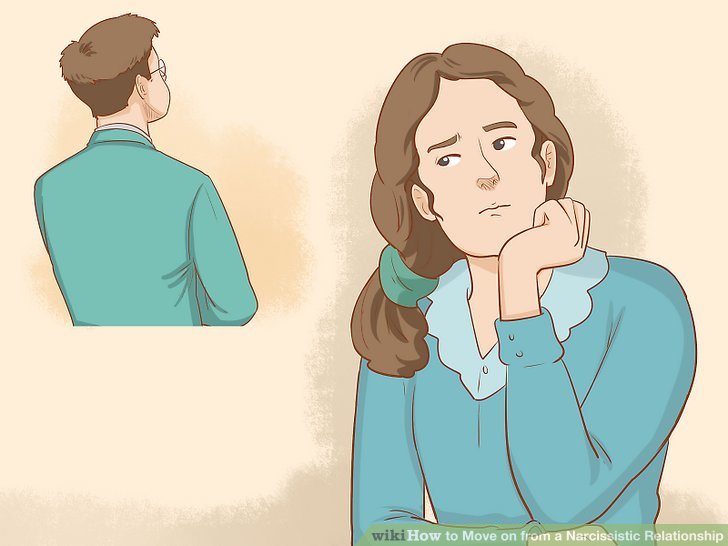
How to move on from a Narcissistic Relationship

A narcissistic relationship can be a bumpy road, and when the relationship ends, you may find yourself at a crossroads. Maybe you find yourself wanting to run back to your ex, while at the same time you want to start moving on. Recovering from a relationship with a narcissist can be tough, but we’re here for you. By setting boundaries and focusing on yourself, you can move on from a narcissistic relationship and on the road of recovery.

Go no contact.


If the relationship was abusive, it may be best to stop all communication with them. Going no contact means blocking your ex from all ways of contacting you. That means social media, texting, calling, and seeing them in-person. Avoiding them will help you heal from the relationship without them manipulating you.

The no contact rule typically lasts 30 days, but it may be best to stick to the no contact rule indefinitely when moving on from a narcissistic relationship.

It’s difficult for a narcissist to feel empathy and reciprocate feelings, so they turn to manipulation to form the relationship they want.

Not communicating with a narcissist will break this manipulation and help you connect with your feelings as an individual.

Set boundaries for yourself


Heal by creating distance between you and your narcissistic ex. Boundaries will not only help you protect yourself from their selfish behavior, but they will encourage you to grow. You are worthy of respect and deserve kindness, so set boundaries that’ll help you bloom. Stick to the no contact rule and avoid answering their calls, or try your best not to talk about them.

Build boundaries to protect yourself from further abuse rather than building them to keep people out. For example, keep some personal information like your fears to yourself when meeting new people, but don’t be afraid to express your interests.

Vocalize your boundaries by telling your ex, "You can’t treat me this way," or, "I don’t have to listen to your abuse."

Prioritize self-care when establishing your boundaries by focusing on your needs first.

Reflect on the relationship


Move on by making peace with the past. You’re most likely angry with your ex and how they manipulated you. It’s normal—healthy even—to feel hatred toward the relationship, but your anger won’t help you move forward. Take time to reflect on the goods and bads of the relationship, focusing on what you learned. The goal is to eventually make peace with what happened.

Anger can help you see the wrongs in the relationship, but it won’t help you heal emotionally.

Forgiveness doesn’t mean you have to let your ex off the hook. They hurt you, and you don’t need to forget it. What you do need is to forgive yourself.

Write down your reasons for moving on.


Remove self-doubt by reminding yourself why the relationship’s over. Make a list of all the reasons why you want to keep moving forward without your ex. Being clear on why you want to move on can help motivate you when things get tough.

Your reasons can be specific to the relationship or about personal growth. For example, you can write, "I want to move on because they made me feel bad about my cooking," or, "I want to move on because I deserve love and respect."

Save the list on your phone or keep it in your favorite notebook.

Refer back to the list when you start having self-doubts or your ex tries to contact you.

Take a break from dating.


A narcissistic relationship can make you second guess your ability to have healthy relationships. When you’re in a narcissistic relationship, you may feel like an accessory or unimportant. It’s important to reconnect with your self worth before jumping back into the playing field because you can’t have a healthy romantic relationship without a healthy relationship with yourself.

Try not to rush the need to start dating again. Protect yourself by making sure you’re ready to be in a new relationship.

Being ready to date again will look different for everyone. Perhaps your narcissistic ex isn’t on your mind anymore, you feel confident, or you meet someone special.

Remember, recovery isn’t linear. Go at your own pace and do what you think is right.

Let yourself grieve.


Breakups can be hard even when they end a toxic relationship. You may feel lost, confused, angry, and frustrated when leaving a narcissist, and it’s okay to grieve what you’ve lost. Be kind with yourself, healing takes time.

All of your feelings are valid, so let them come and go.

Think of each emotion as a new wave in the healing process. Waves crash and fall, but they eventually leave with the tide.

Your ex most likely won’t share your grief. They might miss the praise and admiration, but they’ll find it easy to move on. Don’t take this personally as this is not a reflection of your worth, but a reflection of their egotistical behavior.

Know that it’s okay to still have feelings.


No matter how badly your ex treated you, you may still love them, and that’s okay. It’s normal to feel lonely and confused after a breakup, and it’s even more common to feel lost after breaking up with a narcissist. You may still want them back just to fill the emptiness in your heart, but know that this is part of the healing process.

Every feeling you’re feeling is valid, even if it contradicts what you think you should be feeling.

Acknowledge your emotions, feel them, and let them go.

Try filling that emptiness with something else like a craft, new pet, or time with friends.

Reconnect with yourself.


Do things you love to help you move on. Focus on your dreams and your future because your narcissistic ex isn’t around to control you anymore. Is there a hobby your ex made you give up? Did you give up your dream of getting a masters because they thought it was best? Rekindling these joys can help you find yourself again.

Chase the dreams your ex made you forget.

Explore the hobbies your ex thought were silly.

Do whatever makes you happy!

Love yourself a little more.


The key to moving on is falling back in love with yourself. You deserve to be in a loving relationship, so why not make that first comeback loving yourself? Unravel the critiques and negative thoughts your narcissistic ex instilled in you. Treat yourself to something special like a new outfit, your favorite dessert, or a day at the spa. Take the time to care for yourself in a way they never did.

Self-forgiveness is an important part of loving yourself.

Forgive yourself for all your self-doubts, and push aside lingering negative thoughts.

Remember who you are.


You’re so much more than a person who was in a relationship. Your ex may make you think you’re nothing without them, but they’re wrong. Make a list of all of your hobbies, strengths, and relationships. What are you to your family and friends? What are things you love to do? What are you to yourself? Reminding yourself of these things can help you reconnect with your identity.

Think about how you describe yourself to others. Are you a painter? A student?

Ask yourself what you mean to people you care about. Are you a sibling? A best friend?

Consider how you view yourself by asking yourself, "Who am I?" and, "What do I like?"

Reach out to loved ones for support.


Moving on isn’t something you have to do alone. Your ex may have hurt some of your relationships with friends and family members, and now is the time to reach out. Ask for some guidance, or simply ask for a hug.

No matter what your ex may have told you, you’re not alone.

Apologize to those your ex may have hurt. Taking the time to talk to your friends and family members about the abuse can help mend your relationship with them.

It can be difficult to trust after a narcissistic relationship. Fear might make you want to push loved ones away, but know not everyone is going to hurt you.

Seek professional help.


Therapists and counselors are here to help you through this difficult time. They can guide you on your path of healing, and help you work through any negative thoughts or behaviors. Being in a relationship with a narcissist can put a toll on your mental wellbeing, and you don’t need to go through the process of moving on alone

Why narcissistic abuse and trauma bonding is so powerful for codependents

Are you codependent and struggling to leave an abusive relationship with a narcissist? I bet you are in one almighty hell and that leaving the narcissist feels impossible. Are you aware why you feel this way? The answer lies in the power of trauma bonding for codependents. To help you begin to detach from the abusive narcissist and ultimately claim your freedom, understanding what is happening for you is imperative. The first thing to understand is that you have been brainwashed through the cycle of narcissistic abuse and trauma bonding. As a result you may feel at the mercy of the narc. This is caused through the emotional attachment and psychological dependence created through trauma bonding. If you are also codependent, you have ingrained patterns of thought and behaviour that are strengthening those trauma bonds even further. These patterns, established from earlier experiences of abuse, are not helping your sense of empowerment to break free. This is tough stuff to tackle. But we must address regardless. Detachment won’t happen as swiftly now, if codependency is left unaddressed. Additionally, working on these patterns are critical in inoculating you from future narcissistic predators. So buckle in. Some of this will be confronting, but you can do this. You must, you need this courage from you now. Challenging your codependency will do nothing but help you step out of survival mode and the repeated abusive relationships that have caused you so many wounds. It’s a win-win in reclaiming your power, freedom & joy.

Cycle of narcissistic abuse and trauma bonding

The cycle of narcissistic abuse relates to the three phases of narc relationships: idealisation, devaluation, and discard. Of key relevance as to why it’s so hard to leave are the tactics used by the narcissist during idealisation and devaluation, employed precisely to keep you trapped in the relationship. Love bombing saturates the idealisation phase, creating an addictive quality to the relationship. You become reliant on the narc for delivering the adoration that causes the highs you experience. Shifting into devaluation, the need to dominate and control you comes to the fore. The narc begins the abuse replete with the strategies designed to disempower you completely (e.g.: gaslighting, denial, triangulation, smear campaigns, isolation etc.). Trauma bonding begins during devaluation. In breaking you down through the abuse, the narc is careful to also include occasional tastes of love bombing.

Intermittent reinforcement ensures you keep chasing the high you now believe you need to survive, which is their love & attention (albeit false versions of these). Occasionally scoring these gives you hope. This is the hook that makes you stay, believing things can return to the how they were when you first met. The trauma bonds are continuously strengthened in this cycle of hurt, and comfort, fortifying your addiction to the narcissist.

What is codependency

Narcissist and codependent couplings are extremely common. It therefore stands to reason to consider how trauma bonding for codependents plays out. Codependency is a pattern of enabling and controlling traits and behaviours. These result from self-esteem being dependent on the behaviours and needs of others. It is developed through significant relationships where the other party has compulsive or addictive behaviours, is otherwise ill; or from dysfunction and/or abuse in families-of-origin. As a codependent, you feel at the mercy of others. You perceive your experience of pain or happiness is entirely driven by the significant other in your life. This is completely understandable in that if that person is being abusive, you are in pain. If they are in love bombing mode, you are happy.

Unfortunately, this correlation internalises to the point where you take responsibility for the actions and behaviours of the other. This leads to the belief that what you do or say causes their behaviour and actions. Consequently, your enabling and controlling behaviours are really about trying to navigate the world based on these beliefs. People pleasing, inability to say no, enabling dysfunctional behaviour of a significant other, sacrificing own needs for those of others etc., are all hallmarks of codependency. And all of these, make sense when you understand that driving this, is the belief that if you can get it right, they will be happy, hence you will be too. The flaw is, of course, that you are not responsible for the behaviours and actions of anyone other than yourself. Indeed, you cannot control anyone other than yourself. As a codependent who hasn’t yet begun recovery work, this may sound like crazy talk.

Codependents & narcissists

As a codependent, an insatiable giver, you are the ideal target for the narcissist, the insatiable taker. From the outset of the relationship, your beliefs about yourself and the world are already programmed from previous experiences of abuse and trauma bonding. Ordinarily part of the function of trauma bonding for the narcissist is to secure the power and control supply they crave. As a codependent, however, you are primed to meet these needs from the get go. Not sure about that? Check out these characteristics that arise from narcissistic abuse and trauma bonding:

  • your self-worth feels entirely dependent on the narc
  • you deny your own needs & focus exclusively on meeting those of the narc
  • boundaries are either non-existent or very weak
  • communicating your own needs is nearly impossible because you don’t even know what they are anymore
  • you take responsibility and blame for the narc’s actions and behaviours
  • your fear of abandonment is disabling
  • you have an intense need for approval from the narcissist


  • Here’s the thing…these are also traits of codependency. So, from the very beginning, you are perfectly designed for the narcissist. Supplying their ego needs is a given for you. Meeting the needs of others is how you operate in the world, it is likely all you know and reflects all you’ve ever experienced of love.

    Effect of trauma bonding for codependents

    So why is trauma bonding for codependents different? Here’s why. When trauma bonding kicks in with the narcissist, you are likely to recognise it as ‘this is what love is, this is what happens in relationships’. This makes recognition of abuse even more difficult for you than it is for non-codependents. With no comparative way of being or experiencing significant relationships, to you, the abuse is normal. This clearly makes leaving the narcissist more complex. Additionally, trauma bonding for codependents reinforces all you have ever known of yourself and the world. This arguably strengthens the ties to the narcissist, and unquestionably fuels your codependent belief systems.

    How? Your internal dialogue has always told you that to be ‘good enough’, approval must be sought externally from others and achieved through giving, giving, giving. You now have a narcissist verbalising this as well, and demanding their needs be met upon threat of abuse. Of course, with narcissists, expectations of perfection and shifting goal posts mean you never can actually meet the needs they articulate. Stating that trauma bonding reinforces codependent belief systems is really, a bit of an understatement. What would not be a stretch is to say that trauma bonding for codependents is like flicking the switch on the self-destruct mode of a bomb.

    The other added challenge facing the codependent is the belief that it is your job to fix others. Your very self-value is bound to this view and drives almost all you do. Fixing broken people for you, is like securing supply is for the narcissist. You need to believe you are helping and fixing others to feel worthwhile. And what more broken people around are there than narcissists? This is how trauma bonding for codependents is different. You must break your addiction to the narcissist specifically, as well as face your addiction to giving every single ounce of yourself to others in order to feel worthy.

    Is it possible to break free from the trauma bonds?

    Absolutely! I won’t lie, it takes hard work. But YOU CAN DO IT! Thousands upon thousands have, why not you? That’s right, no reason whatsoever. Whilst I’ve highlighted how trauma bonds for codependents differ, I don’t believe it is harder for you to break free than it is for non-codependents. Narcissistic abuse and trauma bonding is hugely damaging from any angle. It simply means that tackling your recovery journey must take into account codependent traits and behaviours. Your recovery will include mindfulness practices such as:

  • Learning about and recognising in yourself traits of codependency
  • Catching yourself when in these patterns of thought and challenging their truth
  • Connecting with your emotions to uncover the reality and your authentic truth that lies beyond programmed thought patterns


  • These practices, and more on breaking free from trauma bonds is on its way. Keep your eyes peeled. On a parting note…the deep down soul work you do as a codependent in breaking free from the narcissist will be nothing short of transformational. Imagine living life where you swap out the mantra of ‘must be good enough, must make others happy’ for ‘awwww yeah, I’m more than good enough and I am happy’!

    Blueprint for narcissistic abuse recovery

    Meaning of recovery

    What does it mean when we talk about recovery from narcissistic abuse? You’re probably most familiar with the term ‘recovery’ with reference to injury or ill-health including addiction. Dictionaries define it’s meaning as finding your way back to full health and wellness after injury or illness; or retrieving something that is lost. These definitions don’t really do the outcomes of the process of healing from narcissistic abuse justice. It is something much more life changing than this. It is about walking through the darkness and finding your light. It is about reclaiming your freedom and joy. Recovery is the transformation of your inner world emotionally, psychologically, and mentally, achieved by working through wounds old and new. This delivers you to a state of awareness that enables mindful living, no longer caught in past repeating traps of unhelpful behaviours. To recover means moving beyond blaming the narc for all your hurts and working through the pain that led you to them in the first place, stepping into a place of accountability, reality, awareness, and full, proud ownership of yourelf. It is about reaching authenticity where your inner voice and true self is honoured, with living your best life the natural consequence.

    Breaking the cycle of narcissistic abuse

    We are blessed to live in an age where finding a recovery program for pretty much any challenge is possible…alcoholism, drug addiction, infidelity, shopping, cluttering, gambling, hoarding, compulsive lying, internet usage, workaholism, overeating, codependency and of course, narcissistic abuse. These last two, are predominantly treated separately. It’s either a recovery program for codependency or for narcissistic abuse. Experience working with survivors of narcissistic abuse suggests that this isn’t the way to go due to a pattern that exists where: 1. experience with abusive narcissists is rarely limited to just the one relationship; and 2. the survivor is more often than not, codependent.

    For this reason, focusing solely on healing the wounds sustained through narcissistic relationships is not sufficient to achieve true recovery as it has been defined above. Programs that concentrate only on the perils of narcissism do not resolve wounds entirely, with vulnerability to future narcissistic abuse remaining. Full recovery relies on also addressing the root of your hurts and healing these. This takes huge courage and commitment.

    It is the shift from blaming another for the terrible narcissistic abuse inflicted on you as the cause of all your troubles (please do not misunderstand me, they are unequivocally responsible for the abuse you have suffered at their hands), to also recognising how and why you made certain decisions that led you to the situation. It is a transformative choice to leave victimhood behind and seize personal responsibility for your present and your future.

    This is about understanding your susceptibility to certain situations and people. It means looking some of your biggest and scariest hurts, square in the eye and saying: ‘It’s time to deal with you, it’s going to be hard, but I am fiercely ready to do this for myself’! These hurts are likely to manifest as codependency traits and the source of these will be the reason you find yourself trapped in a repeating cycle of unhealthy relationships with narcissists. Why is this you ask?

    The development of codependency occurs through the suppression of own needs, in order to meet those of others within dysfunctional families-of-origin or other significant relationships. Identity and self-esteem become dependent on the behaviours, emotions, and needs of others. This motivates the abandonment and sacrifice of the self in favour of the needs of others. For example, the child of a narcissist may bury the desire to express negative emotions to prevent punishment from the parent, who is unable to permit any semblance of challenge or criticism of themselves.

    Over time, this pattern of behaviour becomes so ingrained it is normalised. So much so, that for many the concept of love fuses with self-sacrifice and pain. Enter the narcissist who demands their needs dominate all others, and well, it’s simply magnetic. The insatiable giver and the insatiable taker fit together like a key in a deadlock. The attraction is an inevitable and recurring disaster UNTIL you do the recovery work.

    Understanding these mechanics highlights why an externally focused narcissistic abuse recovery program will only ever do half the healing job and emphasises the importance of also tackling your codependent tendencies. This is the magic bullet to breaking the cycle if you keep finding yourself abused by narcissists.

    Blueprint for narcissistic abuse recovery

    Step 1 – Unhook from the narc

  • Recognise the truth of your situation and that the narcissist is abusing you. Step out of denial about who they are, and that you have any capacity to control anyone other than yourself.
  • Make it your personal mission to become your own expert on Narcissistic Personality Disorder (NPD) and the abuse through education. This is key to comprehending it isn’t you, it is them; and that you cannot change them, nor do they want to change.
  • Sever your connection to the narcissist, ideally through ‘No Contact’. If this isn’t possible, for reasons such as shared parenting, family or work responsibilities, initiate ‘Low Contact’ & grey rock.


  • Step 2 – Ensure self-care is your priority

  • Expect discombobulation to reign for a period after severing ties. This will be due to your own disorientation without the narc constantly controlling your every move; as well as the likelihood of the narc employing smear campaigns and flying monkeys to punish you for no longer being in control of your every move.
  • Prepare for this period & reconnect with support networks such as family, friends, colleagues etc. you 100% know you can trust. Consider additional reinforcement such as appropriately trained therapists and other resources available in your community. Accept all genuine helping hands offered.
  • Begin practising basic kindness towards your mind, body, and spirit, by eating healthily, sleeping well, exercising for at least 30 mins a day, and refraining from leaning on substances.
  • Limit exposure where possible to situations and people who make you emotionally vulnerable.


  • Step 3 – Assessment of self and reality

  • Commit to facing reality with unflinching honesty and courage.
  • Examine your reality: where are you at; why are you where you are; what patterns exist in your life; what underlying behaviours led you to these repeating situations; what is in you that drives your unhelpful behaviours; what would you like to change; what have you learnt; what is working and what isn’t working for you?
  • Acknowledge the needs of your childhood which were not met.
  • Identify what/who is self-limiting or toxic in your life.
  • Be bold, be brave – take full accountability and ownership of your one precious life and your reality. No rationalisations. No excuses. No defences. No denial. There is no need to, this is about building self-knowledge to heal and make the changes you are seeking. You are doing this for you.


  • Step 4 – Reclaim yourself, your present and your future

  • Forgive yourself. Know that you have done the best you could in the circumstances given to you, much of which was beyond your control. Whatever it is…you did it to survive.
  • Grieve the unmet needs of your childhood. These cannot now be fulfilled by others in adulthood, the time has passed. To move forward and break the repeating patterns of behaviour that lead to relationships that break your heart, you must acknowledge the hurts, accept them, and let them go.
  • Reconnect to your inner voice and current needs, this is your pipeline to your true self and authenticity. Your compass to finding your best life. Tune in by mindfully asking yourself regularly ‘What am I feeling at this moment?’. The answer will guide you towards any necessary changes that align with your freedom and joy.
  • Define and implement strong, clear boundaries to take full responsibility for what is yours to own and to separate you from responsibilities that belong to others.
  • Ruthlessly remove the toxicity out of your life.


  • The framework for recovery from narcissistic abuse provides immediate rescue from the current harm by removing yourself from the situation. Assessing and healing the wounds that have kept you returning to similar relationship dynamics inoculates you from future narcissistic abuse. Reconnecting to your needs as they exist now and honouring them by taking appropriate action, creates authenticity between your internal and external selves. In doing this, the central false belief of codependency is shattered. It is no longer possible to equate self-sacrifice and pain with love.

    Instead, you mindfully choose to shape your life with people and experiences that are consistent with your needs and how you value yourself. There can surely be nothing more worthy in your life than saving yourself.

    Getting past fear & leaving the narcissist

    If you are in the process of awakening to the reality of narcissistic abuse, you will get to the point of thinking ‘I must break free’. And right off the back of that, the next thought will be ‘but how’??? This question can keep you entangled for years. Don’t let it. Understand that this is all about how the narcissist controls you through fear. In this piece you will find the answer to getting past your fear and leaving the narcissist. Let’s be real. When you begin unravelling the tangled web the narcissist weaves, there won’t be one or two obstacles to setting yourself free. There will be many. The focus of this article is what surfaces once you start thinking of possible obstacles: fear. Big, fat, ugly, suffocating fear. Let’s check out why the narcissist controls you through fear, and what to do about it to set yourself free.

    What drives the narcissist’s compulsion to manipulate and control you

    The pathological narcissist is disordered. As you will know by now, this plays out in a bunch of maladaptive behaviours, traits and beliefs. Entitlement, superiority, envy, omnipotence, grandiosity, insatiable hunger for attention, exploitative relationships…to name but a few. All of this is a façade. In the sense that pathological narcissists have fabricated a false-self constructed of these beliefs which plays out in the behaviours. They need the false-self to deny the reality of their real-selves which is fragile, weak, flawed and out of control. To maintain this fantasy world, they need supply. This being the hits of validation that their beliefs about their false-selves are reality rather than make believe. The addiction to confirming that their belief system is factual can never be satisfied because it is rooted in their psychological survival. Hence why they will roll out every trick in the book to get those hits of validation by manipulating and controlling you.

    How manipulation and control show up in idealisation and devaluation

    Let’s zoom in to the cycle of narcissistic abuse to illustrate how it works. During idealisation you are manipulated into handing over positive supply through love bombing. By virtue of believing you are in love, you naturally mirror back the adoration they shower you with. At the same time, the foundations to control you are also being built. Through love bombing your addiction to the pathological narcissist starts up, which is then exploited later in trauma bonding to fortify control further. When you devaluation sets in, the narc changes the focus of their manipulation. By this stage, you will have at some stage faltered in your job of feeding constant positive supply. And the reaction this causes for the narc incites moments when they glimpse their own ugliness. In an attempt to reverse the internal chaos this causes for them; the manipulation becomes 100% about control. Because if they can control you into handing over supply whether positive or negative in a way that reinforces those beliefs about their false-selves, then they feel safe.

    Why the narcissist controls you through fear

    This leads us to one of the biggest reasons you feel stuck in the relationship with the narc, despite the urgency of that thought ‘I must break free’. Fear. We’re going to set aside the concepts of positive supply, your addiction to the narc and trauma bonding in this piece. This is about negative supply, and the cost of this to you. I hardly need to tell you gorgeous one that negative supply is 95% of the devaluation phase of the cycle of narcissistic abuse. It is the psychological, emotional, mental and frequently also physical and sexual abuse you endure. It is therefore unsurprising that as the target of this horror, you experience resistance (as well as a multitude of other psychological reactions and injuries). This is problematic for the narc as it is diametrically opposed to the reinforcement they demand of you. After all, if they were truly beyond reproach, better than all others, all powerful, blah blah blah, – what’s to resist, right? You reacting in this way is a threat to them of experiencing a narcissistic injury. And this MUST be avoided at all costs. This is how it plays out…as the narc’s abuse increases, so too does your resistance. Aware that this is what’s happening within you, they escalate further their attempts to control you (whether directly or indirectly by manipulating your environment and other relationships) to get those hits of supply. You come to realise that if you do not comply, you will pay dearly. So, you submit. Despite not wanting to. Despite the harm it causes you. Despite hearing that little voice inside you begging you to resist. And you do it, because you are fearful of what might happen if you don’t. You are in effect surviving a fear constructed existence borne out of their manipulation and control.

    Fear of what might happen

    To be frank there is a lot to be fearful of. The abuse is horrendous…which leads me back to that thought ‘I must break free’. Because of the programming you’ve experienced to submit to the narcissist, you know what you are up against. And this when your mind turns to ‘but how’??? As you begin to explore how you can make your freedom a reality, you seek practical steps to make it happen. And with every step identified, so is a corresponding fear based on your knowledge of just what the pathological narcissist is capable of.

    Common fears faced are:

  • Loss of family, including children; friends; and employment from the narcissist’s smear campaigns
  • Financial hardship arising from the narcissist’s work in isolating you from employment and from joint bank accounts
  • Homelessness as a consequence of the previous point
  • Escalated violence
  • Buy-in to the lies that you are incapable of standing alone without them


  • The list goes on. These are without a doubt, significant and SCARY as hell. Engulfing, paralysing fear sets in. And based on what you know, entirely possible, perhaps even likely. Simultaneously you know you need to break free, quite literally to save yourself. It is one hell of an internal pressure cooker. What tends to happen is this. You struggle with the cognitive dissonance of wrestling this seemingly intractable problem. It is entirely overwhelming. And because you can’t logically determine a way to eradicate the possible challenges, you turn to yourself and try to adjust the urgency of the need to escape. This too proves a pickle to eliminate…which takes you to ‘I must first become strong and courageous. I must first overcome the fear. THEN I can set myself free’. This can keep you stuck for years. Do NOT let it.

    Getting past your fear and leaving the narcissist

    Tackling the belief: ‘I must first become strong and courageous. I must first overcome the fear’, is the key to leaving the narcissist. Let’s unpack this…

    1. Dealing with the challenges practically I urge you to reach out for help in developing a safety plan with trained professionals to sort out how to mitigate possible scenarios. You don’t need to do this alone.

    2. Dealing with ‘overcoming fear’ This is the thing to confront. Focus your sweet self here. All of us feel the fear. Because it is real. This is the abuse in action. Remember: the narcissist controls you through fear. Striving to get to the point where you have overcome your fear is futile. It will not happen. There will be costs to setting yourself free. Accept this and let it go. You have no choice in this. This is beyond your control. What is within your control is your life and the choice you must make to take the costs of leaving vs. the greater ones of staying. You must choose to either continue living with the narcissist knowing that the abuse escalates, and consequently so too does the harm done to you, with your fear intensifying proportionally. Or, walk straight through the fear towards a life that will be fear free in the longer term. It will be scary as hell. There will not be one thing about walking through the fear and out the door, that will be easy in the short term. But walking through that fear is the only way out.

    3. Dealing with ‘becoming strong & courageous’ Set yourself free. Do it now. It will never become easier. The longer you wait, the harder it becomes because of that cycle of upping stakes and deepening fear. You’ve got to bite the bullet. And here is the secret. The moment you make the decision to save yourself knowing the fear cannot be overcome, strength and courage comes. The sheer act of deciding and committing 100% to saving yourself…no matter what…knowing it’s going be the hardest thing you have ever done…infuses you with strength and courage. Why? Because you are finally returning to your true-self. By hearing your urgency to set yourself free. By taking action for yourself. By backing yourself. It is the first true act of healing.

    Making it happen

    Hold tight to your decision to save yourself. Use these anchors when touchstones of truth are needed:

  • Remember what has led you to this point. All the horror you have SURVIVED. Because of your strength. Because of your courage. You, are a warrior.
  • Remember that the very fact you have survived, is proof you will survive and surmount all the obstacles that will come your way.
  • Remember that the obstacles that will arise will not compare to those you are currently facing on a daily basis.
  • Remember that alongside your strength and courage, an element of fear will walk with you because it won’t begin to leave until you do.


  • There’s another secret afoot…As you smash every barrier and hardship that rises up on your mission to set yourself free, you will realise how very fearless you are becoming. This is what you have to look forward to. A freedom like you’ve never previously known. ‘The only way out is through’. Make this your mantra. You’ve got this. Now get to it. Set yourself free.

    Why narcissistic abuse is so hard to admit to yourself

    Admitting to narcissistic abuse can be monumentally difficult. Particularly if you are at the beginning of your healing journey. Many may have pointed out their concerns you are suffering abuse, yet for you, labelling it “abuse”, is so very hard. And it bothers you that this is the case, you ask yourself: ‘Why can’t I just call it abuse? What’s wrong with me?’ Getting to the point where you can call it by its name, is essential to begin recovering from the devastation of the narcissist who has hijacked your life, heart, mind, and soul. The struggle to reach this point, can be painful. This article helps you get there by understanding why it’s so impossibly hard in the first place. We look at the cycle of shame from narcissistic abuse, and how to break it to move through your journey of recovery.

    Why admission matters - The power of acceptance

    The thing about admitting any truth to yourself, is that it’s necessary for acceptance, which in turn is a prerequisite to letting go. To recover from narcissistic abuse, moving through each of these stages is integral. Detachment from the narcissist naturally grows within you throughout this process, gifting you with the clarity needed to truly heal by seeing the narc for what they really are.

    Admitting to yourself that the narcissist is indeed abusive, is the first major step on this journey. This stands to reason as what remains unacknowledged, cannot be addressed nor, obviously, healed. Conversely, refusing to admit to abuse exacerbates internal mechanisms that desperately need you to come to the point of acceptance. Frequently, avoidance of emotions, thoughts and memories attached to traumatic experiences such as abuse, result in the development of symptoms of PTSD and C-PTSD. Hence, the importance of admitting to what has happened to you, is the way forward for healing.

    Self-validation

    The fact that you are wrestling with why you can’t admit to having suffered abuse is actually a really positive sign. It indicates that the truth is winning the battle inside you. It is in the process of being surfaced…you are almost there! Wanting to answer the question of why you can’t admit it, also implies that intellectually and objectively, when you look at the evidence, there is no way around it. It is/was abuse.

    When able to remove yourself sufficiently from the narcissist’s manipulations, you unequivocally know the truth. Yet this realisation only agitates you further when the doubts from the narcissist’s gaslighting kick in again, only to lead you back full circle to where you started. You know the facts, but you are programmed to not to trust them, nor yourself.

    It is a maddening cycle. You question yourself. Question them. And because you can’t label it abuse you want to know ‘what’s wrong with me that I can’t just call it what it is?!’ But rest assured, you are almost there. The truth is setting you free. And when you get there, by saying ‘yes, this is what has happened to me’, you give yourself what you’ve been starved of for so long: self-validation. The power of this cannot be underestimated. You are verifying the truth of your reality. And that you matter.

    So, why is admitting to narcissistic abuse so hard?

    Denial Whilst there is ongoing enmeshment with the narcissist, attachment subsists, and the power of their games continue to poison your mind. Whether you are still in a relationship with them or not. You know the entanglement is still alive & well for you, as long as the answer is yes to the question ‘am I hoping that they will change, and the abuse will stop?’. The answer to this whilst still in a relationship is readily recognisable. When no longer in a relationship, it’s a bit trickier. You know that it is still thriving within you when you secretly hold onto thoughts like ‘I just know they will wake up to what they’ve done, and they will change because we are meant to be together’. The survival of hope is directly relevant to avoiding admitting to the abuse. To sustain hope, denial is working hard to turn you away from reality by minimising or outright negating your truth. As long as you cling to hope, you remain emotionally hooked, indeed addicted to the narcissist.

    Sense making Let’s be categorically clear: there is nothing with you. Your internal struggle, and the denial, is a normal reaction to an abnormal situation. ALL those who have suffered narcissistic abuse, at some point, go through this internal battle. Repeat after me: ‘there is nothing wrong with me’. It is the result of the trauma sustained at the hands of the pathological narcissist. The very thing you are fighting to deny: the abuse. All the trauma bonding, effect of Stockholm syndrome, addiction to the relationship and gaslighting etc. is precipitating your struggle. You are on a sense making journey seeking some purpose and logic where none can be found. Rationalising the chaos of the narcissist’s game is proving futile which invites in cognitive dissonance.

    Cognitive dissonance To maintain hope, you are trying to reconcile the irreconcilable. You are aware of your suffering, and do know it’s because of the narcissist’s harm. Simultaneously you want to believe in their good and that they will change. Because you need this to be the case. Deep down, you DO know it is abuse. But, owning this terrible truth and labelling their behaviour as such, signifies the following:

  • All along, irrespective of the label, all the actions, the behaviours, the decisions, the betrayals, during ALL of this, none of it has been OK with you. Not really. Not even when you have told yourself it doesn’t really matter…or maybe you don’t remember things properly…or that they were just having a bad day…or that you deserved it…or…whatever. At no point, during any of these attempts to squash your truth, has any of the abuse been OK with you.
  • You know that by remaining in the relationship or re-entering it, having accepted their treatment of you as abuse you would be making an informed choice as to what you accept as being OK for you from now on. And this isn’t OK with you.


  • The two points above are cognitive dissonance in action in the absence of admission of reality and not letting go. You are struggling with two mutually exclusive concepts. You know you cannot concurrently be abused & be OK. Equally, you know the promise of an emotionally healthy and loving relationship isn’t going to happen.

    Internalised shame All of this causes you to feel shame (which of course should NEVER sit with the victim and rightfully sits with the abuser). You know it isn’t OK, and yet you stay, because you:

  • want to believe the promises of change and that the abuse will stop
  • desperately NEED this to happen – like any drug, the thought of living without that person you first met when being love bombed, is too much to bear; and
  • believe you love them.


  • The shame resulting from trying to make the ‘not OK, OK’, is one more state the pathological narcissist intends for you to feel as a result of their abuse. By internalising shame, the negative self-beliefs the narcissist programmes you to own are strengthened. The greater your sense of shame, the more self-worth plummets and the less likely you are to sever ties and remove yourself as a source of their supply. The effect of all this combined is the root cause of why admitting to narcissistic abuse is so hard. It is a self-sustaining vicious cycle that reinforces & perpetuates narcissistic abuse. Time to break the cycle!

    Breaking the cycle by admitting to narcissistic abuse

    To recap…you already DO know it is abuse. AND, you already know this is not OK with you. This means you at a crossroads on your journey where you are ready to confront the truth. You know you must make a choice to either: a) carry on knowingly aware of the abuse, or b) cut things off. Both are hugely painful and difficult options. Neither of these appeal in any way. Resistance is huge, and understandably so. The differences between the options are… In a) the shame will cripple you slowly eating away at your sweet self. And who knows to what extent the abuse will continue to escalate & what damage ensue. In option a) your suffering will not end. It will undoubtedly increase. In option b) the withdrawal will also feel crippling for a time. BUT, you will heal. You will get through it. Your suffering WILL end.

    In option a) there is no hope you will be OK. In option b) hope you will be OK is a valid belief to sustain. This is where freedom & joy is waiting for you. Is there really a choice? Choose YOU!

    When hope is killing you: Narcissistic abuse

    Hope is a wonderful thing. It inspires strength and courage to persevere in adverse circumstances. It is the anchor that helps us endure and overcome the seemingly unbearable. But is it possible that hope has a dark side? If clinging to hope the narcissist will change, the answer is yes. When it comes to narcissistic abuse, hope can be a killer. In this piece we check out why this is the case, and how letting go of the hope that the good in the narcissist will win the day, is the key to reclaiming your life, freedom & joy.

    A heart full of hope

    Often those in relationships with narcissists are either codependent and/or deeply compassionate, intuitive, sensitive, and generous individuals – a.k.a. empaths. The magnetism between codependents/empaths and pathological narcissists makes sense when you break it down. At its most basic level the attraction works like this: one is a giver, and one is a taker. Seemingly the perfect match. However, if you’re reading this for insight into whether hope the narcissist will change is realistic, chances are that you are awakening to the disastrous reality of the match. It is also highly likely that you are at the very least an empath, possibly also codependent. Why this background on codependency and empaths? Because of how relevant traits and qualities work with hope within a narcissistic abusive relationship.

    Hope springs eternal in the compassionate heart

    Let’s check out first how hope interacts with the empath’s heart. For you, caring for others is hard wired into your DNA. Your emotional sensitivity enables instinctive understanding and concern for the suffering of others. It is as though a gravitational pull exists for those who are pain. Your compassionate heart urges you to nurture whoever. Whenever. Complementing your caring nature, you steer through life guided by certain values that are inextricably linked to the generosity of your spirit.

    You believe in:

  • the goodness of others (and continue fighting for this, irrespective of how much ugliness a person may show you),
  • helping others to also come to see their innate goodness,
  • committing to others through thick and thin, and
  • loving unconditionally.


  • These traits, qualities and values combined are the core ingredients of the eternally hopeful heart. If these ring true for you, your faith that the goodness in others will prevail is nigh unshakeable. The world could do with more hearts such as yours, and in most instances, the gifts within you have the power to move mountains.

    The fixing heart of the codependent

    Whilst not all empaths are codependent, most codependents are also empaths. For this reason, your compassionate heart may be complicated by also having a touch of the ‘fixing heart’. Codependents display a pattern of enabling and controlling behaviours, arising from self-esteem being dependent on the behaviours and needs of others. The behaviours develop through dysfunctional relationships where the other party has compulsive and/or addictive behaviours or is otherwise ill (including Narcissistic Personality Disorder – NPD).

    The fixing heart of the codependent possesses the desire, perhaps indeed the need, to ‘fix others’ for validation and self-worth. This drive is a coping strategy developed in reaction to the partner’s compulsion, where a pathological need exists to satisfy their craving (e.g.: with NPD this would be supply in the form of attention). Satisfying the ‘need’ overcomes not only the dependent, but also you as a party to the relationship. This happens because when their hunger is unsatisfied, you pay the price through their abuse. Consequently, over time, you learn to suppress your needs in favour of those of the dependent to avoid or minimise the abuse. This alienation from your true self causes the psychological wounds of codependency.

    If you are codependent, in addition to the compassionate heart’s ideology, you also believe that:

  • you are responsible for the behaviours and actions of others, and
  • therefore, if you could just be good enough, through the sheer power of your efforts they will: not need to satisfy their dependency urges, and not be abusive towards you


  • A bit problematic isn’t it? It’s quite a burden to carry, as well as being logically flawed. For the ‘compassionate heart’, hope is borne that the goodness in others will win the day, for their own sake. For the fixing heart, sure, hope also exists for the sake of the other. But it is also for your own sake. By holding onto the hopes above, it is also about proving to yourself the goodness within you.

    To the mind of the codependent, making the good of the narcissist prevail equates to being good enough. The error in logic results from tying your worth to the dysfunctional actions and behaviours of another. Which, gorgeous one, in reality, you are not responsible for and cannot control. There is no winner in this scenario. The fixing heart cannot triumph in this circumstance.

    When the hopeful meet the broken

    Things go awry when the eternally hopeful & fixing heart collides with the black one of the narcissist. Big time. All your buttons are pushed and raison d’etre is activated full force. You see their need, and brokenness, and you yearn to help them. To fix them. And the narcissist sees this in you. They know it and they play to it. This is why they have targeted you.

    Their survival depends on protecting themselves from confronting the truth of what lies beyond their false-self (the belief system hinging on their superiority, entitlement, power, control etc.). Hence their compulsive need to secure reinforcement that the false-self is real. Attention that fulfils this purpose, is the narcissist’s supply. You are targeted because what motivates you (to care for, give to, and help others) is what fuels their existence when focused exclusively on them. This is their addiction.

    What they see when you rock up isn’t your innate value, rather what your qualities represent to them and their addiction. What they see because of your hope, is endless supply. And so, when the hopeful meet the broken, hope is the stuff that feeds the wounds of both the codependent and the narcissist, creating that formidable bond of the narcissistic abusive relationship.

    When hope becomes a killer

    Undeniably, hope is a beautiful and mighty force capable of making the impossible, possible. I’m a massive advocate for its awesome power…except when holding out for change causes damage, and the possibility of transformation happening is non-existent.

    The harm happens from continuing to suffer abuse while the mechanics of hope inside you keep you from leaving the relationship. Because of your compassionate heart, the idea of turning away from those you care for, let alone those who are broken in some way, is an abomination to the values that underpin your existence. Causing others pain, causes you pain.

    For the fixing heart, in a way, you are addicted to evidencing that your hope in the good of the narcissist and the relationship, is worth investing in because your self-worth is tied to making it so. Throw in the love you feel for the narcissist, and it’s a tricky situation indeed. Add in the addiction you have to the relationship and the narcissist and hope the narcissist will change, and hope becomes a killer.

    In short, you endlessly cling to the idea of the person you first fell for to return, eradicating the abusive person you’ve come to know. The initial show of ‘goodness’, and intermittent reappearance of this tactic, serves to reinforce that your hope is not without grounding. Meanwhile the abuse you sustain continues, and exacerbates, amplifying the reasons why getting back to the ‘good’ version of the narcissist is so critical.

    You may even have experienced being discarded. Maybe once, twice, possibly several times, only to begin all over again… all because of hope. This right here is the cycle of narcissistic abuse with idealisation, devaluation, and discard. It doesn’t deviate. The pattern repeats itself ad infinitum in the life of the narcissist. The significance of this is that they will never change. The abuse will never cease. The shift you are pinning your hopes on will never come to fruition. And this is how hope becomes a killer.

    Letting go of the hope the narcissist will change

    The time to awaken has come. The abusive narcissist has a way of twisting pretty much anything into something it is inherently not. Including hope, and all the gifts within you that make you a gorgeous one. The care, compassion, generosity, and kindness. In the hands of the narcissist, these become your jailers. But just as hope tethers you to the narcissist, and the narcissist to you, it is also they key to setting yourself free. When hope their goodness will prevail is let go, there is nothing left preventing you from accepting reality and setting yourself free.

    Equally, when you set hope aside, your purpose for the narcissist is defunct and without your offering of constant supply, you are redundant to them. The only thing that will win the day while you hold onto the hope the narcissist will change, is their destruction of you. Deep down you know this. Use this knowledge. Stop pouring your hope futilely into the narcissist. Start investing it instead where change can happen: in you. Take every ounce of your priceless care, compassion, generosity, and kindness for your own self. Use it to heal. And to find your way to the truth that you are indeed good enough. All on your own.

    No Contact vs. the narcissist’s silent treatment & ghosting: The differences

    Is the narcissist suggesting that you are narcissistic because of your decision to go No Contact? Are you in a dither wondering if perhaps there is something to this? After all, what’s the difference between going No Contact, the silent treatment and ghosting? This constant self-questioning is yet one more outcome of having suffered narcissistic abuse. You have very deliberately been programmed by the narcissist to doubt yourself at every turn. Particularly when it comes to worrying that you are the narcissist, rather than the victim of one.

    Going No Contact offers the narcissist a golden opportunity to exacerbate your fretting over this specific concern. Inevitably when you make the decision to go No Contact, the narcissist will launch a smear campaign. Entirely false yet irksome information eventually makes its way to as a result. The act of going No Contact (especially within the context of removing yourself from dysfunctional narcissistic family systems), is perfect because it offers fodder for their campaign. It is seized as ‘solid evidence’ that you are one sick puppy, truly narcissistic!

    Their “logic” goes like this: The silent treatment is a form of emotional abuse used by narcissists. No Contact is silent. Ergo, you are an abusive narcissist. And of course, they are the poor, long suffering victim. Ummm…no.

    Unsurprisingly, and completely intentionally on the part of the narcissist, this triggers your fears, causing you further harm in the murky waters of spiralling self-doubt. Regardless of the fact you are no longer in contact, if you fall for this they are still controlling and manipulating you. Do not let them! You have more than enough to work on right now in recovery. You have no more time nor energy for any more of their nonsense.

    No Contact

    No Contact involves severing all ties and communication channels with a narcissist (or other Cluster B Personality Disoder’d individual) who has caused you ongoing damage through abuse. It is the active prevention of interaction of any sort. This includes all direct forms of communication with the narcissist. No receiving nor responding to any meet ups, phone calls, text messages, social media bombs, letters, emails etc. It also relates to blocking indirect dealings such as via the narcissist’s flying monkeys.

    No Contact is frequently the last option for victims of narcissistic abuse who are pushed to do so as a self-preservation measure. It is about preventing exposure to any further abuse to begin healing and reclaiming a life of freedom. The decision to go No Contact feels like the only available choice because:

  • You realise the abuse has been ongoing, repeated, and unchanging for extended periods, often for years.
  • This leads to recognition and acceptance that interaction of any sort will only result in more abuse.
  • You simply cannot take any more pain.
  • Their abuse is beyond your control. The only thing you can control, is to remove yourself from it.


  • No Contact outcomes

    These circumstances force not only the conclusion that No Contact is necessary for survival, but also the devastating understanding that there will be no closure. Specifically, this means that for many, when the decision is reached, there can be no goodbye, no explanation provided to the other party as to why you need to do this. To do so, to engage in any way, only prolongs the abuse and the harm sustained.

    Despite what some may suppose who have blessedly not experienced narcissistic abuse, the decision is agonising and deeply distressing. For the simple reason that notwithstanding the abuse, for many, this means walking away from someone you love. And for the empath or codependent, this is unfathomably difficult. The strength and courage required is mighty, and the depth of sadness one of real grief.

    Now to the silent treatment & ghosting…

    Yep, the narc’s point around No Contact, the silent treatment & ghosting all being about silence is 100% correct. But what lies beyond this gross over-simplification? Let’s drill down.

    Silent treatment and ghosting drivers

    Both the silent treatment and ghosting relate to withholding information to exercise power and control over you. They are indeed forms of emotional and psychological abuse. The silent treatment occurs during the devaluation phase of the abuse cycle to punish you and to fortify trauma bonds. It is also employed to communicate your decreasing and contingent worth to the narcissist depending on your ability to meet their supply needs.

    The silent treatment can run from hours, to days, to weeks, to months. However long it takes for you to learn your lesson and amp up provision of supply. Ghosting is a strategy used to discard you when the narc decides your supply no longer meets their needs. This approach conveys: ‘you have no value to me’. Just as the name suggests, ghosting is a disappearing act. It is sudden & unexplained. Your existence is in effect deleted from theirs. To their mind, there is really no need to sully their hands with any unnecessarily unpleasant conversation if you are of no immediate nor further benefit to them. So, why bother? Sure, you may need closure, but since when has this ever been about you?

    Silent treatment and ghosting outcomes

    The narcissist is well aware that refusing to communicate with you has psychological effects of cruel proportions. The void created by the absence of information fosters crazy making ‘void filling’ repercussions within you, centred on answering the frantic question ‘what have I done wrong’? This is clearly desirable because in going to this place you assume the responsibility for any given issue, and the narcissist continues to avoid accountability for their actions and behaviours.

    Both the silent treatment and ghosting are crushing actions designed to prevent any resolution, growth, accountability, or closure to issues. Furthermore, the narcissist knows that you are addicted to them and the relationship. They have worked hard through trauma bonding to ensure this.

    They know that the pain caused from withholding means that you will not only agree to take ownership of their abuse, but you are also willing to do whatever it takes to make things OK again. Your emotional and psychological reaction to the silent treatment and ghosting is A grade supply for the narc. This is why they do it.

    So, what is the difference between No Contact, the silent treatment and ghosting?

    As with most narcissistic behaviours, the litmus test you can apply in pinpointing the difference between No Contact, the silent treatment and ghosting, is intention. This handy little magnifying glass shines the light on getting at the truth of most narcissistic situations when doubting yourself begins to creep in. The intent behind going No Contact vs. using the silent treatment and ghosting is all in the drivers and the outcomes. They are as starkly contrasted as night & day. Or, as you are compared to the narcissist. One is an act of self-protection & self-preservation and the other an act of punishment & manipulation. One is to prevent harm, the other is to cause harm. One is to abuse and the other to stop it.

    Decluttering as a catalyst for narcissistic abuse recovery

    Are you looking for effective, simple ways to kickstart your recovery from narcissistic abuse? Decluttering is one way that can help you make this happen. The impact of narcissistic abuse, whether it be from family members, partners, friends, or colleagues, can be crippling. The abuse centres on power and control, using manipulation including gaslighting, triangulation, isolation, devaluation etc. to make you feel worthless, confused, dependent and questioning your sanity. The effects can leave you spinning long after the relationship has ceased.

    Significant self-doubt and self-blame often plague survivors prior to recovery. As well as the tireless quest to understand what you did wrong (despite having done nothing wrong, and the responsibility sitting entirely with the narcissist) you are likely to also be revisiting traumatic thoughts and memories which seem to intrude no matter how much you try to avoid them. You might feel hopeless, powerless and stuck in the trauma.

    These are symptoms of Post-Traumatic Stress Disorder (PTSD) and Complex-PTSD (C-PTSD), commonly experienced by survivors of narcissistic abuse.

    Accepting what has happened, and letting go of all that is holding you trapped in the nightmare is part of your antidote. This may seem an insurmountable and impossible challenge, but you can do it. Securing support through a therapist you connect with, who specialises in narcissistic abuse, PTSD and C-PTSD is strongly recommended.

    There are also things you can do in your own time, at home, to stimulate the needed shift of letting go as you begin to recover. As bizarre as this may sound, decluttering can be a mighty force in helping you achieve this, as well as being instrumental in reclaiming your true self, and carving out what your best life will look like for the future.

    Decluttering & becoming unstuck

    Decluttering is about reducing the stuff in spaces where you spend most time, for instance your home or work space. It’s about choosing what you will keep based on various litmus tests such as what you need vs. don’t need, what you use vs. what you don’t, or what brings you joy. Decluttering, and minimalism, have for some time now been widely pushed as life changing for a variety of reasons: to lead a more intentional life, to increase creativity and greater capacity for focus, to reduce stress and cultivate calm, to promote better sleep and health, to shape an aesthetically pleasing space, to become more organised, to foster environmental sustainability…These are just a small sample, there can be little doubt that decluttering delivers super positive outcomes! Ask any convert and light beams from them as they excitedly share their story.

    So given the awesome life changing power of decluttering, is it possible that it can also be beneficial for narcissistic abuse recovery? Is there a link between letting go of physical stuff enabling moving forward emotionally? Is it possible that ditching things can precipitate becoming unstuck from the memories that are holding you in place in that cycle of traumatic memories and self-doubt? The answer is yes. Here’s why.

    The things that surround you have all been acquired at some point in your past. This means that each item has the power to trigger memories from your history, if you have associated that item to a person, event, or situation. Where this link has been forged, the item cues recall of emotional memories and connected thoughts. These of course can be positive. Photos of special moments with friends you hold dear, are likely to bring you huge warm & fuzzies. In this instance, you probably would choose to keep these safe and close by.

    Conversely, items can hold negative connotations for you. Using the same example, you may ponder a pic of a special moment with a friend who ultimately betrayed you deeply, which may give rise to great sadness and hurt. In this scenario, you may want to consider whether having this constant reminder will serve you in the future or hinder you by pulling you back to focus on the pain. Is it time to let this item go? More importantly, is it time to let that pain go? Having suffered narcissistic abuse, you are likely to be surrounded by many items that trigger replaying the traumatic emotional memories and agitate that cycle of self-blame and doubt.

    We tend not to really pay all that much attention to how the things in our daily lives make us feel, until we take the time to reflect on them. Until you mindfully ask yourself how you feel, and what comes to mind when assessing different items, awareness of the impact the stuff is having on you may be limited.

    I encourage you to use Marie Kondo’s question ‘does this bring me joy’ (2014) to truly tap into what emotions are connected to any given item. This probing will show you what does in fact add to your life positively, as well as identifying trigger items that are anchoring you to the causes of your pain. When you determine it’s the latter, it’s gotta go! Setting aside items by giving them away, recycling them or throwing them out, PARTICULARLY when there is a strong negative emotional memory attached to them, sets you free. When you keep these things despite the pain it gives you, you are choosing to remain attached to what has caused you harm. In doing this, you remain stuck.

    When you let go of the thing, it’s not really about the thing – you are choosing to break the power the person, event, or situation that caused you harm, had over you. You are choosing to reclaim your power, let go, move forward, and seize your freedom. So, by intentionally choosing to keep only things that bring you joy in your surroundings and removing all things that trigger negative emotional memories, you are building a safe and nurturing space for you to begin healing. True, the memories are still within you, but these will no longer be regularly cued by your environment. This may also calm feelings of hypervigilance, another symptom of PTSD/C-PTSD.

    Decluttering as a superpower

    These benefits can be profound, although decluttering isn’t just about stuff in your environment and removing anchors to negative emotional memories. As survivors of narcissistic abuse, a strong sense of identity is often compromised as a function of the trauma experienced that shatters previously held worldviews. This loss of sense of self is in itself deeply distressing, and finding a way back to your true self fundamental for recovery.

    Getting clarity on what you like and don’t like, what is versus what isn’t important to you, is strengthened through the practice of decluttering. You’ll perceive an awakening sense of becoming reacquainted with your true self. You’ll also notice a dawning superpower within you of being able to identify negativity and walk away from it – if you are co-dependent, this is indeed a revelatory superpower and precious gift. Repeatedly asking yourself whether this or that material thing enhances your life by bringing joy, starts to creep into other areas of your life. You will find yourself mindfully asking yourself this same question of people and situations, and choosing to let go of the negative and hold onto the positive, laying the foundation for your best life to bloom.

    The empowering nature of decluttering is about developing a mindful practice to consciously choose what you will allow in your life. Letting go of things, people and situations that keep you attached to traumatic memories kickstarts the narcissistic recovery process and short-circuits that stuck feeling. Ditch the material, people-shaped, and situational junk in your life and make way for the goodies that make your soul sing. Get your decluttering revolution started now!