Tuesday, 11 April 2023

Aromatherapy and Meditation: Essential in Recovery from Narcissistic Abuse

Recovery from narcissistic and emotional abuse is an investment. It takes repeated, conscious effort (and often, money) over the long term. There isn’t a magical phrase or one-time action that will help one heal from Narcissistic abuse.

If our bodies are out of shape, we need to exercise at least three to four days a week in order to get fit. The same concept applies to getting our traumatized spirits and souls “into shape”. When we first learn we’ve been the target of an emotional manipulator, such as a Narcissist, we spend a lot of time reading and educating ourselves about the manipulative dynamics of disordered personalities. This is helpful because it helps us to understand why our abuser did and said the things they did, as well as to realize that nothing they said about us was really true.

However, as much as I encourage the need for educating oneself by reading about NPD and other personality disorders, there comes a time when such research should cease and, instead, turn one’s attention to recovery methods that are mandatory to enhance and enable the healing process. But before I go into those, let me explain why reading alone does not heal us from Narcissistic abuse.

When we read, watch television, or interact with other people, we do so using our conscious minds. But did you know that some neuroscientists estimate that as much as 98 percent or more of all brain activity is completely unconscious? What that means to us is that most of our decisions and thought processes are performed with our subconscious mind, outside of our conscious awareness. So, when we learn about personality disorders, we cognitively understand the material, but it doesn’t fully address the subconscious mind where stored or forgotten memories and suppressed emotions reside. Enter aromatherapy and guided meditations.

Aromatherapy

In order to access and release emotional trauma, we must stimulate the amygdala. One way to do this is through the sense of smell. The emotional part of our brains doesn’t respond to information obtained through reading, talking, or watching TV or videos. Our sense of smell is directly related to emotions that have been stored, often as far back as childhood. Smell is the only one of our five senses that is directly linked to the lobe of the brain that houses our emotions. Along with all positive emotions, negative emotions such as fear, anger, depression, and anxiety originate from this area. This explains why the scent of an apple pie baking might remind us of Thanksgiving at our Grandmother’s house, resulting in feelings of nostalgia and comfort. It’s also why certain smells can trigger deeply buried fears and trauma, such as those experienced with PTSD or C-PTSD.

Essential oils allow us to access these buried emotions and memories so that we can accept and release them. Emotions are energy moving within our bodies, which work at a faster speed than our thoughts. Words in a book, as well as pictures, can take a few minutes to process, whereas a smell can evoke a memory in mere milliseconds. Suppressed emotions and memories can lead to anxiety, panic attacks, and depression. Essential oils can help us surface and release these negative emotions from wherever they are stored in our cells or energy field. They are especially effective when used in conjunction with other healing modalities such as energy healing and massage therapy.

Guided Meditations

If we were abused, neglected, or unloved during childhood or within an emotionally abusive relationship, over time our subconscious mind accepts these events as truth about who we are. Worse, we often carry around these feelings of unworthiness without understanding why. This manifests in the form of low self-esteem, codependency, depression, and other lower states of consciousness.

In order to lessen or eliminate these unconscious beliefs and feelings of low self-worth, we have to “retrain our brain”. Just as it took a while for us to accept lies as truth, it will take time for us to reverse this process. Guided meditations are an effective and easy way to do this. It is recommended use of guided meditations at any time of day, but especially at bedtime. This not only relaxes you and prepares you for a good night’s sleep; the meditation will still benefit you even if you fall asleep.

Choosing which meditations you prefer are a matter of personal choice. Some people are sensitive to binaurals, so you’ll want to test them out first to see if they’re a good fit for you. Meditations are not only beneficial for healing the psyche, but also for repairing DNA, manifesting, and realigning the Chakras.

**Standard Disclaimer: The content provided is designed to support, not replace, medical or psychiatric treatment. If you believe you may have a condition, please seek qualified professional care.
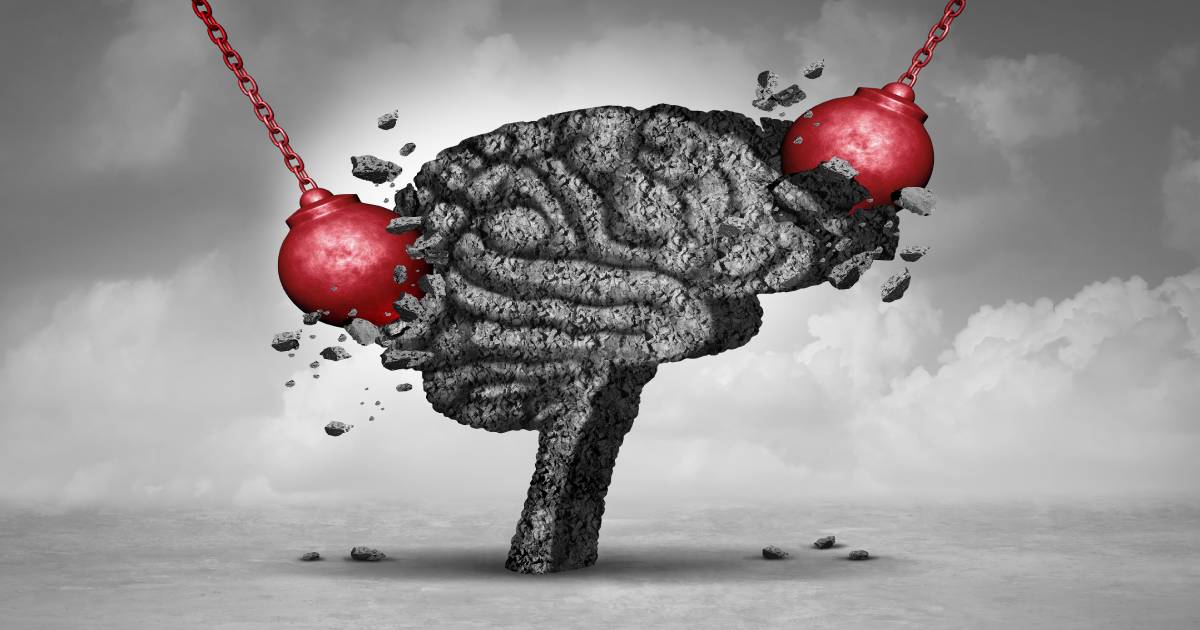
Long-Term Narcissistic Abuse Can Cause Brain Damage

The effects of psychological and narcissistic abuse come with many devastating consequences, but there are two that almost no one knows about unless theyre a doctor or neuroscientist. In fact, these two outcomes may be the most destructive result of emotional trauma over the long-term and is an added reason why if you have children with a narcissistic partner you should try to leave as soon as reasonably possible.

By now, most of us know that repeated emotional trauma leads to both PTSD and C-PTSD, which should be reason enough to leave an abusive partner. But, what many people dont realize is that over time, these repeated emotional injuries shrink the hippocampus, which is responsible for memory and learning, while enlarging the amygdala, which houses primitive emotions such as fear, grief, guilt, envy, and shame.

Hippocampus basics

The hippocampus, which is Greek for seahorse, is a paired structure tucked inside each temporal lobe and shaped, in fact, like a pair of seahorses. It helps to store and release memory. The hippocampus is especially vital to short-term memory, the retaining in mind of a piece of data for a few moments, after which it either gets transferred to permanent memory or is immediately forgotten. Learning depends on short-term memory.

Further, among the many analyses that have been conducted, one in particular shows very disturbing results. In a study conducted by a team of the University of New Orleans and Stanford University researchers, patients with the highest baseline cortisol (a stress hormone) and greater number of PTSD symptoms had the greatest decreases in hippocampal volume over time.

In other words, the longer you stay with an emotionally abusive partner, the more deterioration you can expect of your hippocampus. It can be easily understood how this neurological process may enhance feelings of confusion, cognitive dissonance, and abuse amnesia in victims of narcissistic and psychopathic abuse.

Amygdala basics

Narcissists keep their victims in a constant state of anxiety and fear, which in turn causes their victims to react from his or her amygdala (or reptilian brain). The amygdala controls life functions such as breathing and heart rate and the basic emotions of love, hate, fear, and lust (all of which are considered primal emotions).

Its also responsible for the fight or flight reaction. Victims of narcissistic abuse live in this state almost daily. Over time, the amygdalae remember the things we felt, saw, and heard each time we had a painful experience. Subliminal hints of such stressful events (even photos) will set off the organs attack or escape routines triggering avoiding behaviors or internal turmoil (another good reason to refrain from stalking your ex on social media).

Even after the toxic relationship has ended, victims suffer PTSD, C-PTSD, panic attacks, phobias, and more due to the triggering of their primal fears by their overactive amygdalae. Out of these fears, targets of narcissistic abuse often engage in primitive defense mechanisms including (but not limited to):

  • Denial Victims use denial to escape dealing with painful feelings or areas of their life they dont want to admit.
  • Compartmentalization Victims pigeonhole the abusive aspects of the relationship in order to focus on the positive aspects.
  • Projection Victims project their traits of compassion, empathy, caring, and understanding onto their abuser, when in fact, narcissists and other emotional abusers possess none of those traits.


  • Narcissistic abuse changes your brain

    According to Goleman (2006), everything we learn, everything we read, everything we do, everything we understand, and everything we experience counts on the hippocampus to function correctly. The continual retention of memories demands a large amount of neuronal activity.

    In fact, the brains production of new neurons and laying down connections to others takes place in the hippocampus (Goleman, 2006, p. 273). Goleman also stated, The hippocampus is especially vulnerable to ongoing emotional distress, because of the damaging effects of cortisol (p. 273). When the body endures ongoing stress, cortisol affects the rate at which neurons are either added or subtracted from the hippocampus. This can have grave results on learning. When the neurons are attacked by cortisol, the hippocampus loses neurons and is reduced in size. In fact, duration of stress is almost as destructive as extreme stress. Goleman explained, Cortisol stimulates the amygdala while it impairs the hippocampus, forcing our attention onto the emotions we feel, while restricting our ability to take in new information (pp. 273-274). Goleman adds,

    The neural highway for dysphoria runs from the amygdala to the right side of the prefrontal cortex. As this circuitry activates, our thoughts fixate on what has triggered the distress. And as we become preoccupied, say, with worry or resentment, our mental agility sputters. Likewise, when we are sad activity levels in the prefrontal cortex drop and we generate fewer thoughts. Extremes of anxiety and anger on the one hand and sadness on the other push brain activity beyond its zones of effectiveness.(p. 268)

    But, there is hope. There are reparative activities you can do to restore and rebuild your hippocampus and stop the hijacking of your psyche by your amygdala.

    What to do

    Luckily, as brain scans have now shown (thanks to the magic of neuroplasticity), it is possible for the hippocampus to regrow. An effective method includes the use of EMDR therapy (Eye Movement Desensitization and Reprocessing). One recent study showed that 8 to 12 sessions of EMDR for patients with PTSD showed an average of a 6% increase in the volume of their hippocampi.

    EMDR is also beneficial for counteracting the hyperarousal of the amygdala, allowing the brain to more appropriately direct what needs to happen rather than remain stuck and unnecessarily trigger problematic emotions. Other methods that have been shown to repair both the hippocampus and amygdala include:

  • Guided meditation Recent studies from Harvard University show that daily meditation can help repair the brain by actually rebuilding the brains gray matter. Study participants who spent an average of 27 minutes per day practicing mindfulness exercises showed a major increase in the density of the hippocampus and amygdala and associated reductions in stress, compared to a control group.
  • Aromatherapy and essential oils Please see article: AROMATHERAPY AND MEDITATION: ESSENTIAL STEPS IN RECOVERING FROM NARCISSISTIC ABUSE
  • Performing acts of kindness simple, daily practice of altruism can dramatically alter your outlook on the world.
  • EFT (Emotional Freedom Technique) helps correct the biochemical short-circuiting that occurs with chronic anxiety.

    Of course, the first course of action would be to plan and implement an exit strategy. It takes time to recover from narcissistic abuse and one short encounter can set you back enormously.
  • Saturday, 8 April 2023

    Rebuild Self-Esteem After Narcissistic Abuse

    What is self-esteem or self-worth?

    Self-esteem is how you feel about yourself. It’s similar to the concept of self-worth (and I will use the terms interchangeably in this article). Our goal is to have high self-esteem, meaning we feel good about ourselves most of the time. We know we have intrinsic value. And we know we are still good and worthwhile people even when we’re imperfect and make mistakes. Self-esteem isn’t conceited. It doesn’t mean that you think you’re the best or better than others. People with high self-esteem recognize their strengths and good qualities—and also their weaknesses or areas in need of improvement. They generally feel confident, capable, and worthwhile, but know they aren’t perfect. Unfortunately, lots of people don’t feel good about themselves. This is especially true for people who’ve experienced abuse or relational traumas (such as betrayal, infidelity, child abuse, or abandonment).

    How does narcissistic abuse affect self-esteem?

    People with narcissistic traits can be manipulative. They blame and criticize, and need to be the center of attention. They shift the blame, making you think you’ve done something wrong. They rarely acknowledge their shortcomings and instead convince you that you are the problem; you’re wrong, incapable, or stupid. As a result, we second-guess ourselves and don’t trust our own judgment or perceptions.

    People with narcissistic traits can be volatile. They are quick to anger and sometimes make irrational or unrealistic demands. They are unwilling to compromise and always have to be right. So, we learn to walk on eggshells. We focus on keeping the person with narcissistic traits happy or calm by minimizing or denying our needs and feelings. We discount our needs and wants and think they don’t matter or are wrong. We stop asserting ourselves and become passive or passive-aggressive.

    People with narcissistic traits can be cruel. They are critical and harsh. This leads us to feel inferior and defective. And because we don’t feel worthwhile, we don’t take care of ourselves. We become focused on keeping the peace and making others happy. We don’t want to be called selfish, so we don’t do anything for ourselves or ask for much.

    After narcissistic abuse, people often feel:

  • Defective or like there is something fundamentally wrong with them.
  • Useless, like they can’t do anything right and have no value.
  • Disconnected from themselves.
  • Afraid to assert themselves. They may become people-pleasers and pushovers.
  • Self-doubt. They have difficulty trusting themselves and making decisions.
  • Self-critical.


  • How to rebuild self-esteem after narcissistic abuse

    Rebuilding self-esteem is a process. It’s something that you’ll need to work on consistently for an extended period of time. Bit by bit you will start to feel better about yourself and it will be reflected in the way you treat yourself, the people you choose to spend time with, your dreams and goals for the future, and so forth.

    A note for those still experiencing narcissistic abuse: The strategies below are suggested for those who are recovering from previous abuse. It is very difficult to build self-esteem while you are still experiencing narcissistic abuse (or any form of abuse). It’s like swimming against the tide. If you are in an abusive relationship with anyone (partner, sibling, parent, etc.), I encourage you to reach out for help from your local support resources.

    Self-Care

    Not only is self-care essential for your health, but it also demonstrates that you care about yourself. When you brush your teeth, spend time with friends, or eat healthfully, you are saying to yourself, “I am worth taking care of. I deserve to be healthy and happy.” Most people who have experienced abuse or relational trauma don’t feel worthy of self-care—but don’t let that stop you from practicing self-care! Through consistent acts of self-care, you are building a sense of worthiness. Start by asking yourself what you need throughout the day. Do your best to meet your needs. For example, if you feel hungry, eat. If you feel tired, rest. If you feel lonely, connect with others. Focus on acts of self-care and the feelings of worthiness will follow.

    Connect with Your Authentic Self

    It’s hard to think highly of yourself if you don’t know who you are! In abusive, codependent, or “lopsided” relationships, the focus is on meeting one person’s needs rather than what both people need. And when you focus so much of your time and energy on someone else, you can lose sight of who you are, what matters to you, what you like to do, and so forth. So, it’s likely that you need to reconnect with your authentic self. I encourage you to take some time every day to connect with yourself. This might include journaling, a spiritual practice, trying something new to see if you like it, or getting back to something you used to enjoy or participate in to see if it’s still of interest.

    Trust Yourself

    It’s important that you know you can count on yourself. You can build self-trust much in the same way that you build trust with others. Start by keeping your word to yourself. When you tell yourself you’re going to do something, do it. It’s important that the goals or commitments you make to yourself are doable. Start with a commitment that you absolutely know you can accomplish—because this builds self-trust. This isn’t the time to set lofty goals that are out of reach. Keep it simple and realistic. For example, if you want to reduce the time you spend on social media, you might start by setting a goal to reduce your usage by 15 minutes rather than trying to give it up cold turkey. When you follow through and cut back by 15 minutes, you are building self-trust, a sense that you can count on yourself not just when it comes to this goal, but you can trust your judgment and decisions regarding the important things in your life.

    Listen to Your Feelings

    Feelings provide valuable information. For example, feeling scared or uncomfortable alerts you to danger, while feeling resentful lets you know you are being taken advantage of. It’s important to pay attention to your feelings so you can act accordingly to take care of yourself. One way we cope with abuse is to suppress our feelings; we stop paying attention to them, or we notice them, but don’t take action to meet our needs and feel better. So, you will probably need to intentionally practice noticing your feeling. A great way to tune into your feelings is to pay attention to the bodily sensations that accompany them. How does your body feel when you’re tired? What are the bodily sensations that let you know you’re hungry? What are the physical signs that you feel anxious or worried?

    Be Assertive

    Standing up for yourself is another way to build self-esteem. Being assertive, such as setting boundaries, protects you from being mistreated. And like self-care, assertiveness is necessary for your health and wellbeing, and it reinforces that your opinions and needs matter. Being assertive can feel very uncomfortable, even scary, for many abuse survivors. Practice being assertive with “safe people”. These are people who respect you, are interested in your opinions and wellbeing, and can tolerate disagreements. And start by speaking up about small things and then work your way up to setting more important boundaries. Perhaps, to start, speak up about which movie you want to watch or practice saying no to small requests. This will help you build confidence in your boundary-setting skills.

    Being a victim of abuse is not your fault

    Abused empaths take responsibility for everything that happens to them – regardless of whether it is in any way their fault. Abusers, on the other hand, spray accusations all around them like bullets, taking responsibility for precisely NONE of the mayhem that they cause. According to their own narrative, abusers are never responsible for any of the harm that they do. None of it was their fault.

    As a general principle, when someone says that they are without fault, I see ABUSER writ large in front of my eyes. I have had too much firsthand experience of self-professed People Without Fault and the damage that they inflict on others. Conversely, when someone tells me that they are ultimately to blame for Everything, I sense a likely victim of abuse. It takes someone who has had a long training in carrying the heavy burden of other people’s accusations for a very long time to assume blame for Everything.

    The problem with being a wounded empath

    Being an empath with a wounded, fragile sense of self is that it leaves you with few certainties about yourself. That leaves you with a major problem. Through no fault of your own, it doesn’t take much to send you into melt-down. All attacks on you hit their mark. You become defenseless against the attacks of your so-called “near and dear ones” – despite doing nothing to deserve it. Sadly, that defenseless extends out to others who do not even enjoy that privileged status. In fact, those “near and dear ones” have trained you to accept that it is always open season on your psyche. Your role in all of this is, essentially, to stand there and be target practice.

    What really happens when you “fight back”

    I often hear from women who protest that they “fight back”. To the best of their ability, they do. Unfortunately, they fight back with a view to getting the offensive person to retract their accusations. They try, in other words, to get the abuser(s) to change their opinion. Abusers – rightly in my view – register this attempt as an acknowledgement of the overwhelming importance of their good opinion. Why ever would they choose to give up that power? So “fighting back” serves only to lock you into an ongoing battle with an abusive partner. You tell yourself that you need the validation that they will never give you to be – and see yourself – as a worthwhile person. Now, that is already quite crazy-making enough. Unfortunately, there are other factors that make it even worse.

    The victim blaming tradition

    From popular wisdom – “You made your bed. Now lie in it.” – all the way through to the Law of Attraction, there is a line of thinking that argues that the victim is somehow responsible for the bad people and things that happen to them. I don’t buy that, at all. Rather, I find it deeply offensive and damaging. This is, in fact, fits comfortably with the long tradition of – unthinking – victim blaming. The wasband’s last – and most expensive – psychoanalyst actually asked me to go in and see him. When I did, he informed me, “It takes two to tango.” (The wasband was happy to pay for platitudes because he and his analyst enjoyed a meeting of two small minds.) The shadow side of the Law of Attraction would have you believe that you “attract” the bad into your life, as much as the good. At its most obscene, that kind of approach suggests that you caused your own cancer by not being sufficiently “woke”, or whatever.

    What makes victim blaming a smart move

    Blaming the victim is usually a smart – move for the accuser, anyway. People who have been habitually victimized are used to shouldering the blame for anything in which they are even tangentially involved. I see that tendency in my clients and I know that I did it myself in the bad old days. (At one stage I agonized about causing my mother’s demise – according to my father. Happily, mother invalidated father’s diagnosis by surviving for a further four decades. In rude health. I use the word “rude” advisedly.) Abusers are totally shameless. They will blame you for anything and everything that serves their ends. The more pain their accusations cause you the better, as they see it.

    You cannot accept blame and heal

    Your healing hinges on you rejecting all these appalling claims of being at fault. You cannot accept that you are at fault for an abusive person’s behavior and heal. Bad things and bad people have played havoc in your life because you were not in a position to defend yourself. Most of us lurch into an abusive relationship with a partner because we suffered abuse growing up. As children, we had no possibility of protecting ourselves from abuse. By adulthood, we automatically accept the blame that other people foist on us. Your healing requires you to understand your own wounds and take responsibility for moving beyond past mistakes. But that is a very different thing from being at fault and causing the damage. Nobody, as far as I know, ever says, “I hereby declare that I am going to do everything in my power to attract to me people who will use, abuse and make me feel worthless, powerless and invisible for the longest time.”

    Your abusive partner was not your fault

    Your abusive partner was not your fault. Your tolerance of abuse was not your fault. That trope about you “attracting” toxic people into your life is, in reality, another form of abuse. By people who lack compassion. I totally believe in taking responsibility for your present and your future. I believe in owning responsibility for your own part in your own past. However, I do not believe in accepting the negative judgement that a critical, hostile, interested party passes on you.

    The key difference between you and an abuser

    The time has come for you to trust in yourself. Unlike an abuser, you are not the kind of person who would dream of diminishing your own responsibility for anything to make yourself look better. Rather, you have an ingrained pattern – that you need to lose – of accepting any accusation that makes you look and feel worse. In reality, you do, and always have done, the best you possibly for other people can in any circumstances. Now, it’s time for you to do that for yourself first of all. And if that means rejecting the accusations of being at fault, that is what you need to do. Besides, all those accusations of being at fault were never intended to help you improve in any way. They were designed purely to keep you stuck in a situation of inferiority. The grown up way is different. As and when you do make a mistake – which we all do – instead of agonizing about “faults”, you simple make appropriate amends. Then you move on. End of story.

    Written by Annie Kaszina